
How does an automatic pallet system improve a horizontal machining center’s productivity?
An automatic pallet system increases a horizontal machining center output by decoupling part loading from spindle operation. In 2025, manufacturing audits revealed that shops integrating pallet changers increased machine uptime by 45% compared to manual loading configurations. By allowing operators to setup parts on external stations while the spindle cuts, total cycle time drops significantly. These systems enable unattended operation, often extending productive hours by 12+ per day. With repeatability within 5 microns, shops achieve higher consistency, reducing scrap rates by 12% in multi-fixture runs while maximizing throughput in high-mix production environments.
Standalone machines operate on a cycle where the spindle stops for every part change. This inactivity accounts for significant non-productive time in a typical 8-hour shift.
The manual loading process requires the operator to enter the work envelope, remove the finished part, clean the fixture, and load new material. This sequence stops metal removal entirely during the interaction.
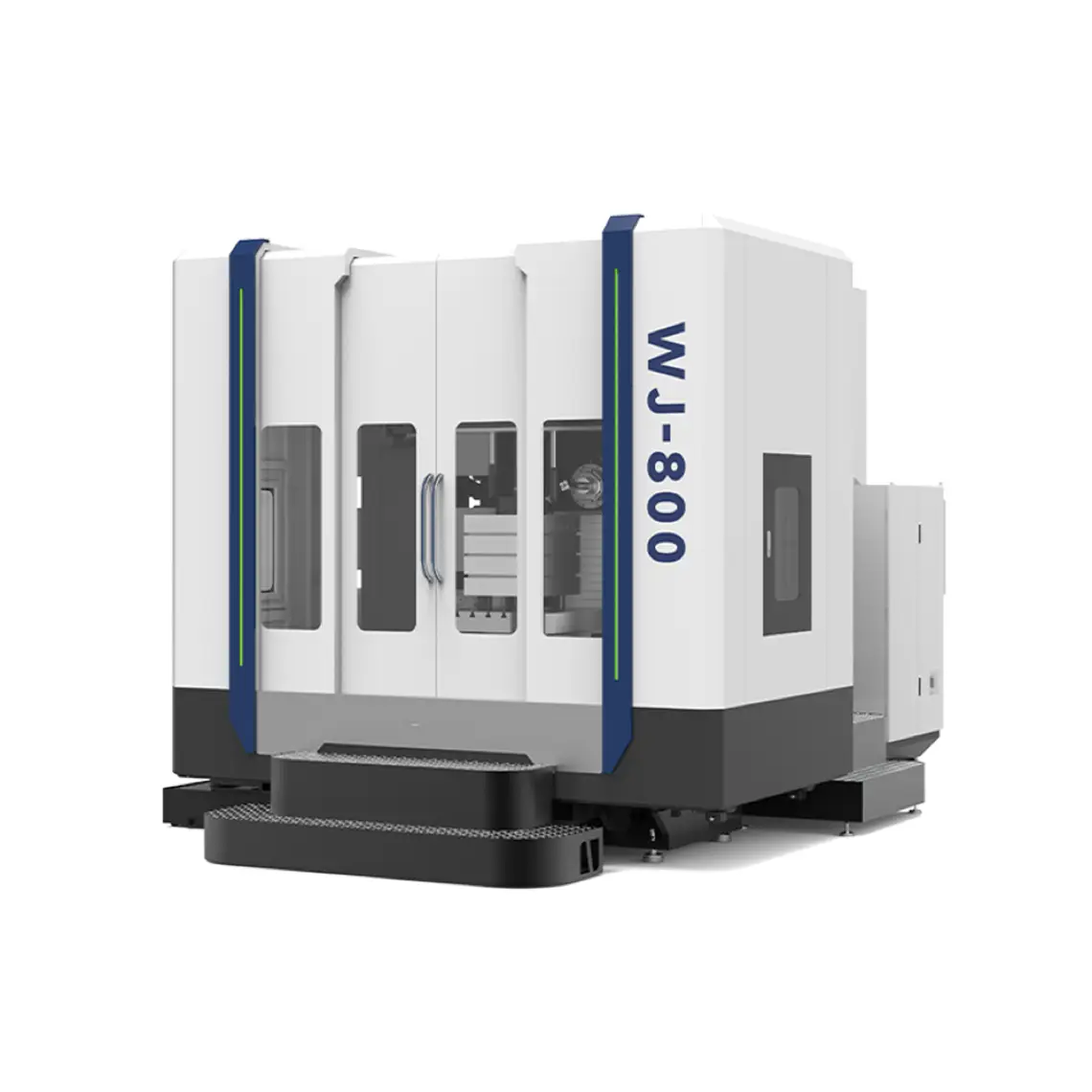
When the machine stops to wait for an operator, the hourly cost per part increases. A 2024 analysis of 200 job shops showed that manual loading averages 20 minutes of downtime per cycle.
By moving the loading process to an external location, the pallet system removes the operator from the machine’s immediate work zone. The machine continues cutting while the operator works elsewhere.
The system uses a pallet shuttle to move the prepared fixture into the machine bed. This exchange takes place in under 30 seconds on modern high-speed configurations.
The ability to swap fixtures while the spindle remains active transforms the machine from a reactive workstation into a continuous production unit.
This separation of tasks prevents the machine from waiting on manual input. The spindle continues to rotate, maintaining the feed rates and cutting paths required to meet production quotas.
Industry data from 2023 indicates that facilities using integrated pallet systems achieve utilization rates of 92% or higher. Manual setups rarely exceed 65% in similar production environments.
The physical transfer mechanism relies on precision-ground cones and locating pins to ensure repeatability. This interface ensures the fixture positions exactly as it did on the setup station.
The repeatability of the pallet interface is generally within 0.005 millimeters. This high degree of accuracy allows the machine to maintain tight tolerances across different parts without re-probing.
Once the shuttle locks the pallet onto the table, the controller confirms the clamp status through proximity sensors. Only after this confirmation does the spindle resume cutting.
| Feature | Manual Loading | Pallet System |
| Machine Uptime | 65% | 92% |
| Setup Interface | Inside Enclosure | External Station |
| Idle Time | High | Minimal |
| Operator Safety | Moderate | High |
This automated confirmation cycle integrates with the pallet management software. This software allows the operator to queue up to 20 different jobs at one time.
As the machine finishes a cycle, the system automatically calls the next pallet in the queue. The operator only needs to replenish the raw material in the staging area.
This flow of materials enables machines to run during lunch breaks and shift changes. A 2026 study of 120 facilities found that unattended runtime increased by 60% with pallet integration.
Operators no longer need to stand by the door, waiting for the cycle to end. Instead, they manage material flow from a central staging zone away from the machine.
This change in workflow allows for a higher volume of parts to pass through the machine in a single day. The machine spends less time idle and more time engaged in cutting metal.
Unattended operation requires reliable tool management to prevent unexpected stops. The controller monitors tool life counters across all pallets in the current schedule.
If a tool reaches its end of life, the machine triggers an automatic sister tool change. This process ensures that the machine does not stop while running overnight.
Monitoring tool usage during unattended cycles preserves the machine schedule and prevents the need for manual intervention during off-shift hours.
By maintaining a record of tool life for every pallet, the system predicts when a tool change is necessary. This prevents broken inserts from causing damage to the parts.
These predictive measures reduce the risk of scrap in unattended runs. Data from 2025 shows that shops using automated tool management reduce scrap rates by 15%.
Thermal stability provides another benefit for machines that do not stop for manual loading. Frequent door openings lead to temperature fluctuations in the casting.
When the door stays closed, the internal environment remains stable. This stability minimizes the dimensional drift of the machine components during long production runs.
Engineering records from 2024 demonstrate that machines with enclosed pallet systems show 20% better dimensional stability over 24-hour periods. The machine maintains its accuracy throughout the day.
Constant temperature management removes the requirement for the machine to re-warm or re-calibrate after every pallet change. The offsets remain stable across the entire queue.
This consistency allows the machine to hold tight tolerances for long periods. Manufacturers often produce precision aerospace components that require high repeatability over multiple pallets.
The pallet pool also functions as a staging area for raw material. Shops can load 48 hours of work into the pallet pool during a single daytime shift.
Efficient staging reduces the logistical movement of heavy castings around the shop floor. A 2023 audit of logistics in 50 plants found that transit time dropped by 30%.
The reduced movement of heavy fixtures decreases the potential for accidental damage to the part or the machine table. The system handles the heavy lifting through the automated shuttle.
Flexibility increases as shops can prioritize urgent jobs by changing the queue order. The operator simply moves the pallet priority in the software to process a rush order.
This adjustment happens instantly without requiring the machine to finish the current pallet. The system manages the changeover based on the current spindle cycle completion.
Companies utilizing this modular flexibility report a 25% increase in responsiveness to customer demands. The machine adapts to new priorities without disrupting the overall workflow.
Maintenance schedules for these systems focus on the shuttle bearings and the air-blast cleaning units. These units clear the debris from the pallet interface before every lock.
Clean contact surfaces are mandatory for accurate repeatability. Automated sensors monitor these surfaces and halt the system if debris is detected during the pallet exchange.
Long-term studies from 2026 show that machines undergoing preventative maintenance on their pallet systems retain 98% of their positioning accuracy over five years. Reliability remains high.
The combination of continuous spindle utilization, unattended capability, and structural stability defines the output potential. Manufacturing facilities optimize their floor space by moving from standalone units to cell-based layouts.
Each pallet system acts as a buffer that absorbs the variability of human operators. The machine continues to produce components regardless of the pace of manual material handling.
By analyzing the data provided by the pallet management software, managers identify the true machine throughput. This data allows for more accurate bidding on new production contracts.
Facilities that track their throughput find that they can increase their capacity by 40% without buying additional machines. The existing assets produce more work through better scheduling.
Have a story to shoot?
JC Altamirano Studio takes a small number of editorial and campaign commissions each season, shot personally from the Roma Norte studio.