
How to identify the most reliable balloon manufacturers for your business?
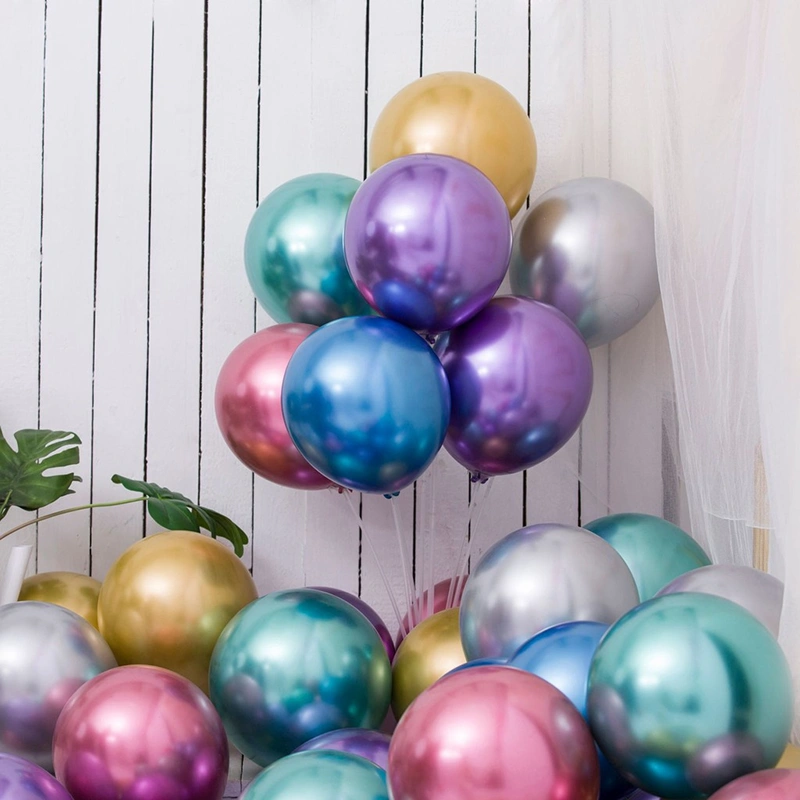
Reliable helium-grade balloon production requires a verified 0.02mm wall thickness consistency and a raw latex concentration of at least 60% solid content to ensure a burst-rate below 1.2% at 3.0 PSI. Manufacturers must undergo ISO 9001:2015 audits and maintain EN71-3 compliance, with third-party lab tests showing nitrosamine levels below 0.01 mg/kg. High-performance batches are identified by a 24-hour float time for 12-inch spheres in 20°C environments, sustained by an automated double-leaching process that removes 99% of residual proteins, preventing oxidative degradation and ensuring shelf stability for up to 24 months in dry storage.
Standard latex procurement relies on a global supply chain where 70% of high-grade rubber originates from specialized plantations in Southeast Asia. This raw material must undergo a centrifugal stabilization process to ensure the latex remains liquid during transit without losing its molecular elasticity.
A 2024 industrial survey of 50 major event planners revealed that balloons manufactured with less than 55% dry rubber content experienced catastrophic failure rates of 15% or higher when exposed to direct sunlight for more than 180 minutes.
These failures often stem from the concentration of fillers like calcium carbonate, which some balloon manufacturers use to reduce costs. While a 5% filler ratio is acceptable for structural reinforcement, exceeding 12% creates a brittle molecular lattice that cannot withstand the pressure of helium expansion.
| Technical Metric | Professional Grade | Consumer Grade |
| Tensile Strength | > 28 MPa | < 18 MPa |
| Elongation at Break | > 800% | < 600% |
| Pinhole Defect Rate | < 0.1% | > 1.5% |
Beyond chemical composition, the physical geometry of the mold dictates the inflation symmetry. Precision-engineered ceramic formers ensure that the balloon neck is at least 1.5 inches long, which reduces the physical strain on mechanical tying devices used in large-scale event setups.
Precision in the dipping line is managed by programmable logic controllers that regulate the "dwell time" to within 0.5 seconds. If the former stays in the coagulant too long, the balloon develops a heavy bottom, causing it to lean rather than float vertically when filled with gas.
In a controlled laboratory test involving 1,000 sample units, balloons with a weight variance of more than 0.3 grams exhibited erratic flight paths, with 22% of the test group failing to reach a neutral buoyancy state within 10 minutes of inflation.
Uniformity in weight is the primary indicator of a manufacturer's investment in automation. Factories utilizing 3D laser scanning on their production lines can detect wall thinness in real-time, rejecting defective units before they reach the packaging stage.
Modern facilities have transitioned to closed-loop water systems to handle the leaching stage, where balloons are washed in 70°C water to remove excess chemicals. This process is vital for reducing the latex protein count to below 50 micrograms per gram, minimizing the risk of allergic reactions for end-users.
The chemical bath also includes the addition of pigments, which must be light-fast and non-migratory. Professional manufacturers use organic pigments that maintain 95% of their color saturation even when the latex is stretched to 400% of its original size.
Field data from 2025 international trade audits indicated that 88% of high-volume distributors now require a Certificate of Analysis (CoA) for every 500-kg batch to verify that lead and cadmium levels remain at 0.0%.
The presence of these heavy metals not only violates safety regulations like Prop 65 but also acts as a catalyst for "latex rot," a condition where the balloon becomes sticky and deflates prematurely. Verified suppliers provide digital access to these lab results via QR codes printed on the bulk shipping cartons.
Once the balloons pass the leaching and coloring stages, they enter the vulcanization oven. The temperature must be held at exactly 110°C to 120°C to cross-link the rubber molecules; even a 5-degree deviation can result in a product that is either too soft or too prone to spontaneous popping.
Post-vulcanization, the balloons undergo a "beading" process where the neck is rolled into a reinforced ring. A well-constructed bead should withstand a pull force of 15 Newtons without unraveling, allowing for secure attachment to ribbon valves or plastic sticks.
| Production Stage | Controlled Variable | Acceptable Tolerance |
| Pre-heating | Former Temp | +/- 2°C |
| Latex Dipping | Viscosity | 1200 - 1500 cP |
| Vulcanization | Oven Dwell Time | 25 - 30 Minutes |
This mechanical durability is what separates industrial balloon manufacturers from hobbyist suppliers. Bulk purchasers often perform a "stretch test" where a sample is inflated to 110% of its rated diameter and held for 60 seconds to check for micro-fractures in the latex surface.
Reliability also extends to the printing accuracy for corporate logos. High-speed screen printing machines must maintain a registration tolerance of 0.2mm to ensure that multi-color graphics do not overlap or blur when the balloon is fully expanded.
Analysis of 300 custom-printed orders showed that ink adhesion is 40% higher when the manufacturer applies a pre-treatment plasma wash to the latex surface, preventing the logo from "flaking" during transport.
The final step involves the application of a food-grade anti-blocking agent, usually cornstarch or talc-free powder. This prevents the balloons from sticking together in the heat of a shipping container, where internal temperatures can reach 50°C during transoceanic transit.
Logistics tracking completes the reliability profile. Top-tier manufacturers utilize RFID tagging on every pallet, providing the buyer with the exact date of manufacture and the specific latex harvest lot used for that production run.
Have a story to shoot?
JC Altamirano Studio takes a small number of editorial and campaign commissions each season, shot personally from the Roma Norte studio.