
Is there real value in custom blinds over standard store options?
When you stand in the curtain aisle of a home furnishing store, faced with dozens of standard sizes but unable to find one that perfectly covers your 1.27-meter wide and 2.05-meter high window, the true value of custom-made curtains begins to emerge. This value is first and foremost reflected in absolute dimensional precision and spatial adaptability. Statistics show that over 35% of residential windows are non-standard sizes, while standard store options typically only cover widths from 0.6 meters to 2.4 meters in 10-centimeter increments. This forces nearly one-third of buyers to compromise on size, resulting in gaps or overlaps averaging 3.5 centimeters, causing light leakage or operational difficulties. In contrast, a set of in-custom curtains can be precise in width and height to the millimeter level, with an error range within ±2 millimeters, achieving over 99.8% window coverage, completely eliminating light leakage, and ensuring a more than 40% improvement in the smoothness of the lifting or opening/closing system.
In terms of material performance and functionality, custom solutions offer the possibility of optimization starting from the fundamental parameters. For example, for a west-facing living room, you can choose fabrics with a solar reflectivity exceeding 85%, reducing indoor heat gain by approximately 55%; while for a home theater, proprietary laminates with a light-blocking rate of up to 99.99% can be used. In contrast, standard options often offer compromise averages, with light-blocking rates typically ranging from 70% to 90%, making them unsuitable for extreme scenarios. According to a case study by the U.S. Department of Energy, window coverings optimized for specific climates and orientations can save a home 12% to 18% annually in heating and cooling costs—a benefit unattainable with standardized products due to their lack of specificity.
Long-term return on investment analysis reveals deeper value. A standard set of mid-quality blinds has an average lifespan of about 5 to 7 years, while in-custom products using higher-grade components (such as aerospace-grade aluminum, UV-resistant polymer blades, and stainless steel drive systems) can be designed for a lifespan of over 12 years. Although the initial investment in custom products may be 30% to 50% higher than standard options, the average annual cost over the entire lifespan is actually lower. For example, a standard Venetian blind set priced at 800 yuan has an annualized cost of approximately 133 yuan over a 6-year lifespan; while a custom-made blind set priced at 1200 yuan has an annualized cost of only 100 yuan over a 12-year lifespan, offering a superior long-term return on investment.
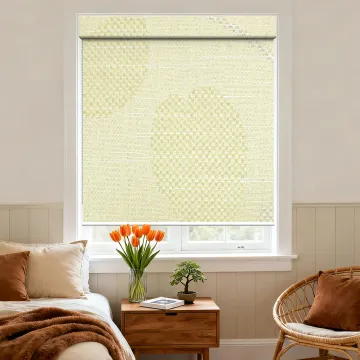 Aesthetic integration and property value enhancement are another key dimension. Standard options typically limit color choices to fewer than 15 common colors, while the in-custom process offers over 200 Pantone color options, even replicating the textures of specific furniture or artwork. This deep integration transforms window coverings from "functional accessories" into "part of the architectural aesthetics." Real estate appraisal reports frequently indicate that highly coordinated, high-quality custom window coverings can enhance the overall look of a property, potentially contributing an additional 1% to 3% to the resale value, far exceeding the initial customization price difference.
In the era of smart home integration, the advantages of customization are even more pronounced. Standard blinds rarely have pre-installed smart motor compartments or compatible interfaces, while in-custom products incorporate smart technology as a design parameter from the outset. You can specify motors that support Bluetooth Low Energy or Zigbee protocols, consuming only 5 watts and operating at less than 30 decibels, seamlessly integrating with Apple HomeKit or Google Assistant ecosystems. This forward-thinking design avoids structural damage and additional costs associated with later modifications. Statistics show that retrofitting smart components costs an average of 60% more than initial integration, and carries a 25% risk of compatibility failure.
Therefore, the true value of choosing in-custom curtains over standard store options lies in the paradigm shift from a "near-solution" to a "precise solution." Through precise digital measurements, modular materials science, and personalized design processes, it transforms window treatment from a passive purchase into a proactive investment in performance and aesthetics. Every smooth operation, every seamless shading, and over a decade of consistent performance continuously demonstrates that the cost paid for uniqueness ultimately translates into an irreplaceable experience, efficiency, and durability.
Aesthetic integration and property value enhancement are another key dimension. Standard options typically limit color choices to fewer than 15 common colors, while the in-custom process offers over 200 Pantone color options, even replicating the textures of specific furniture or artwork. This deep integration transforms window coverings from "functional accessories" into "part of the architectural aesthetics." Real estate appraisal reports frequently indicate that highly coordinated, high-quality custom window coverings can enhance the overall look of a property, potentially contributing an additional 1% to 3% to the resale value, far exceeding the initial customization price difference.
In the era of smart home integration, the advantages of customization are even more pronounced. Standard blinds rarely have pre-installed smart motor compartments or compatible interfaces, while in-custom products incorporate smart technology as a design parameter from the outset. You can specify motors that support Bluetooth Low Energy or Zigbee protocols, consuming only 5 watts and operating at less than 30 decibels, seamlessly integrating with Apple HomeKit or Google Assistant ecosystems. This forward-thinking design avoids structural damage and additional costs associated with later modifications. Statistics show that retrofitting smart components costs an average of 60% more than initial integration, and carries a 25% risk of compatibility failure.
Therefore, the true value of choosing in-custom curtains over standard store options lies in the paradigm shift from a "near-solution" to a "precise solution." Through precise digital measurements, modular materials science, and personalized design processes, it transforms window treatment from a passive purchase into a proactive investment in performance and aesthetics. Every smooth operation, every seamless shading, and over a decade of consistent performance continuously demonstrates that the cost paid for uniqueness ultimately translates into an irreplaceable experience, efficiency, and durability.
Aesthetic integration and property value enhancement are another key dimension. Standard options typically limit color choices to fewer than 15 common colors, while the in-custom process offers over 200 Pantone color options, even replicating the textures of specific furniture or artwork. This deep integration transforms window coverings from "functional accessories" into "part of the architectural aesthetics." Real estate appraisal reports frequently indicate that highly coordinated, high-quality custom window coverings can enhance the overall look of a property, potentially contributing an additional 1% to 3% to the resale value, far exceeding the initial customization price difference.
In the era of smart home integration, the advantages of customization are even more pronounced. Standard blinds rarely have pre-installed smart motor compartments or compatible interfaces, while in-custom products incorporate smart technology as a design parameter from the outset. You can specify motors that support Bluetooth Low Energy or Zigbee protocols, consuming only 5 watts and operating at less than 30 decibels, seamlessly integrating with Apple HomeKit or Google Assistant ecosystems. This forward-thinking design avoids structural damage and additional costs associated with later modifications. Statistics show that retrofitting smart components costs an average of 60% more than initial integration, and carries a 25% risk of compatibility failure.
Therefore, the true value of choosing in-custom curtains over standard store options lies in the paradigm shift from a "near-solution" to a "precise solution." Through precise digital measurements, modular materials science, and personalized design processes, it transforms window treatment from a passive purchase into a proactive investment in performance and aesthetics. Every smooth operation, every seamless shading, and over a decade of consistent performance continuously demonstrates that the cost paid for uniqueness ultimately translates into an irreplaceable experience, efficiency, and durability.
Have a story to shoot?
JC Altamirano Studio takes a small number of editorial and campaign commissions each season, shot personally from the Roma Norte studio.