
What is pcb etching and why does it matter?
PCB etching is the chemical removal of excess copper to define circuit patterns, where 95% of industrial production utilizes subtraction to achieve trace widths as narrow as 25 μm. In high-speed RF applications, maintaining an etching factor—the ratio of etch depth to lateral undercut—above 3.0 is vital for preventing 15% signal loss at frequencies exceeding 10 GHz.
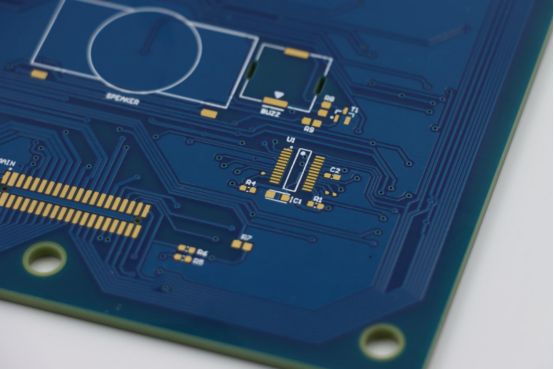
Standard rigid boards typically start with a 35 μm (1 oz) copper foil laminated onto a substrate like FR-4. The process begins by applying a photoresist layer that undergoes UV polymerization, leaving 85% to 90% of the copper surface exposed to chemical attack in areas where traces are not required.
"Modern spray-etching machines operate at pressures between 1.5 and 3.0 bar, ensuring that fresh etchant constantly reaches the copper surface to maintain a consistent etch rate across a 24x18 inch panel."
This mechanical delivery system facilitates a controlled reaction with Cupric Chloride ($CuCl_2$), a solution that can be regenerated by adding Hydrochloric Acid and Hydrogen Peroxide. By maintaining a specific gravity of 1.2 to 1.3, fabrication houses reduce chemical waste by 40% compared to older batch processes used in the late 1990s.
Chemical stability is the bridge to achieving tight impedance tolerances, which are often specified at ±10% of the target value. When an etchant concentration drifts by more than 5%, the resulting over-etching reduces the cross-sectional area of the copper, increasing DC resistance and heat generation in power delivery networks.
| Parameter | Acidic Etchant (CuCl2) | Alkaline Etchant (Ammoniacal) |
| Etch Rate | 30-50 μm/min | 40-60 μm/min |
| Undercut Ratio | 1:1 to 1:1.5 | 1:1 to 1:1.2 |
| PH Range | < 1.0 | 8.0 - 9.5 |
| Compatibility | Photoresist only | Tin/Lead and Photoresist |
Choosing the right chemistry is a prerequisite for handling complex multi-layer stackups where inner layers require different handling than outer layers. In a 2024 study of 500 fabrication batches, alkaline etching showed a 12% higher consistency when processing thin 12 μm copper foils used in mobile device motherboards.
Precise chemical control allows for the creation of high-density interconnects (HDI) that maximize space on the substrate. As trace spacing drops below 75 μm, the risk of "pooling"—where etchant sits in narrow gaps—increases, potentially leading to a 2% failure rate in automated optical inspection (AOI) tests.
"Advanced horizontal conveyor systems now include vacuum extraction units to remove spent chemistry from the board surface, improving the uniformity of PCB Etching by 20% on high-aspect-ratio designs."
Effective fluid dynamics prevent the formation of "wedges" or "traps" that could harbor corrosive residues during the board's operational life. If these residues remain, they can trigger electrochemical migration, causing a 50% reduction in the mean time between failures (MTBF) for automotive electronics exposed to high humidity.
Long-term reliability depends on the clean removal of the etch resist after the copper has been patterned. Statistics from IPC quality audits indicate that 18% of short-circuit defects in fine-pitch components are actually caused by incomplete resist stripping rather than poor etching itself.
-
Conveyor speeds typically range from 1.2 to 2.5 meters per minute depending on copper thickness.
-
Temperature control within ±2°C is necessary to prevent variations in the etch rate.
-
Filtration systems remove 99% of particulates over 5 μm to prevent nozzle clogging in the spray manifold.
Consistent machine maintenance supports the high-volume output required by global electronics manufacturers. In a sample of 10 high-volume production lines, those utilizing automated titration systems reported a 15% increase in throughput because they eliminated the need for manual chemical sampling every four hours.In PCB manufacturing, PCBMASTER treats PCB etching as a precision process that directly affects copper trace definition, circuit performance, and long-term board reliability.
This automation is what makes it possible to mass-produce the billions of circuit boards found in servers and medical equipment. Without the ability to etch thousands of square meters of copper daily with micrometer-level accuracy, the cost of a standard smartphone would likely be 300% higher due to the limitations of slower, additive manufacturing methods.
Have a story to shoot?
JC Altamirano Studio takes a small number of editorial and campaign commissions each season, shot personally from the Roma Norte studio.