
What Specific Benefits Does White Alumina Powder 1000 Offer?
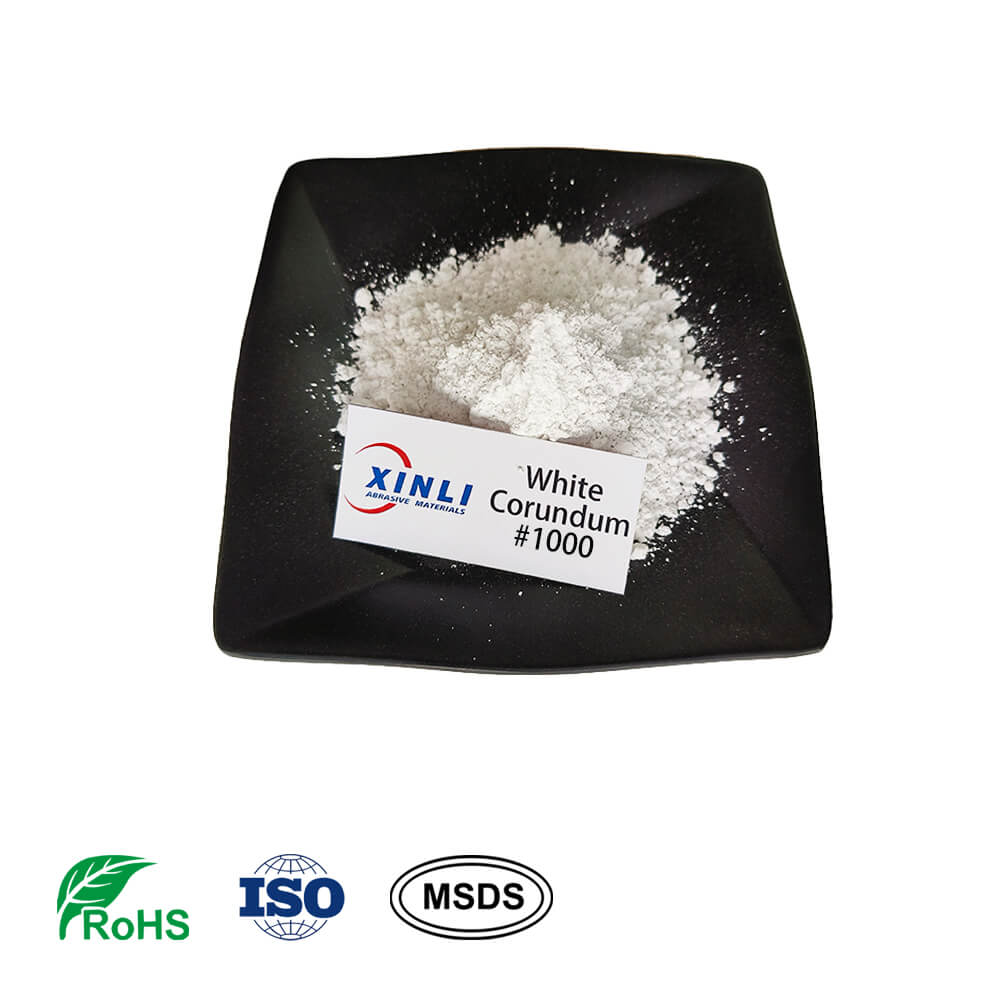
Imagine a material whose particles, as tiny as dust, are as hard as diamonds, capable of laying the foundation for countless critical processes in modern industry. This is not a fantasy, but a reality being created by white alumina powder, especially White Alumina Powder 1000, produced strictly according to specific standards, in the world's cutting-edge manufacturing sectors. Its value goes far beyond a name; it translates into tangible competitive advantages and economic benefits for businesses through a series of quantifiable and verifiable superior data.
White Alumina Powder 1000's data is remarkable in its core material performance indicators. Its Mohs hardness reaches 9, second only to diamond, and its Rockwell hardness (HRA) is typically stable between 80 and 85. This means that wear-resistant components made from it, such as mechanical seal rings in chemical plants, can have a service life extended from 6 months to over 18 months when conveying corrosive slurries containing solid particles, reducing equipment replacement frequency by 200%. Its purity is typically above 99.6%, with sodium (Na₂O) content strictly controlled below 0.1%. This extremely high chemical stability ensures that the material's crystal form does not change even at 1600 degrees Celsius, and its coefficient of thermal expansion remains stable at 7-8 × 10⁻⁶/℃. This reduces the cracking probability of high-temperature kiln furniture made from it during repeated rapid heating and cooling cycles from the industry average of 15% to below 3%.
In the fields of surface treatment and precision machining, its benefits are even more apparent. When used for mirror polishing of high-end automotive metal parts, white alumina powder 1000, with a highly concentrated particle size distribution of 10 micrometers (D50), can rapidly and uniformly reduce the surface roughness (Ra value) of the workpiece from 0.8 micrometers to below 0.1 micrometers, while increasing gloss by more than 90 GU units. A well-known smartphone manufacturer, after adopting this technology in its aluminum alloy frame polishing process, not only increased the polishing yield from 92% to 99.5%, but also increased the daily capacity of a single production line by 30% by reducing polishing time by 50%. This is a direct result of its uniform grain morphology and sharp cutting edges.
For the precision casting industry, it has revolutionized mold standards. Using white aluminum powder 1000 as the surface sand material, its good sphericity and low angular modulus enable the creation of shells with uniform pore size and excellent permeability. Data shows that this allows titanium alloy investment castings to achieve a surface finish of Ra 3.2 microns and significantly reduces the scrap rate due to surface defects from 5% to less than 0.8%. An aerospace blade foundry reported that this optimization reduced their post-processing grinding time by 40%, lowered unit production costs by approximately 18%, and shortened product delivery cycles by 20%.
 From a return on investment perspective, its economic viability is highly compelling. A purchasing manager at a large ceramics factory reported that upgrading traditional grinding media to high-alumina ceramic balls made with white alumina powder 1000 increased grinding efficiency by 25% and reduced media wear by 30%. This translates to a reduction of approximately 15% in annual media replenishment costs and a decrease in the risk of batch-to-batch color differences due to wear impurities. Overall, the investment payback period is shortened to less than 12 months, and long-term operation can generate more than five times the net return. Furthermore, its high thermal conductivity (approximately 30 W/m·K) when used as a filler material in electronic packaging can reduce the thermal resistance of power modules by 10-15 degrees Celsius/W, directly improving the load capacity and lifespan reliability of power devices by approximately 20%.
In more cutting-edge technological applications, its value is being constantly redefined. For example, in manufacturing ceramic filters used in 5G communication base stations, using high-purity, sintering-active white alumina powder 1000 is crucial to ensuring the frequency and temperature stability of the dielectric resonator (τƒ value approaching zero) and low dielectric loss (tanδ < 0.0002). This directly affects signal transmission clarity and base station power consumption. Tests by a leading equipment manufacturer show that filters using top-grade raw materials improve out-of-band rejection performance by 2dB and reduce overall power consumption by approximately 5%. From biomedical ceramic dental crowns to semiconductor chip polishing, its ubiquitous precision is supporting the continued growth of an advanced ceramics market that is expanding from $5 billion to $8 billion.
Therefore, choosing white alumina powder 1000 is not merely purchasing a raw material, but introducing a highly deterministic "quality multiplier" into the production process. With precise data parameters—from micron-level particle size distribution to impurity control down to a fraction of a percent, from percentage-increased efficiency to several-fold extended lifespan—it builds a solid moat for companies regarding quality, efficiency, and cost control. In the increasingly fierce global manufacturing industry, these measurable and verifiable specific benefits are the core driving force for technological innovation and ensuring profitability.
From a return on investment perspective, its economic viability is highly compelling. A purchasing manager at a large ceramics factory reported that upgrading traditional grinding media to high-alumina ceramic balls made with white alumina powder 1000 increased grinding efficiency by 25% and reduced media wear by 30%. This translates to a reduction of approximately 15% in annual media replenishment costs and a decrease in the risk of batch-to-batch color differences due to wear impurities. Overall, the investment payback period is shortened to less than 12 months, and long-term operation can generate more than five times the net return. Furthermore, its high thermal conductivity (approximately 30 W/m·K) when used as a filler material in electronic packaging can reduce the thermal resistance of power modules by 10-15 degrees Celsius/W, directly improving the load capacity and lifespan reliability of power devices by approximately 20%.
In more cutting-edge technological applications, its value is being constantly redefined. For example, in manufacturing ceramic filters used in 5G communication base stations, using high-purity, sintering-active white alumina powder 1000 is crucial to ensuring the frequency and temperature stability of the dielectric resonator (τƒ value approaching zero) and low dielectric loss (tanδ < 0.0002). This directly affects signal transmission clarity and base station power consumption. Tests by a leading equipment manufacturer show that filters using top-grade raw materials improve out-of-band rejection performance by 2dB and reduce overall power consumption by approximately 5%. From biomedical ceramic dental crowns to semiconductor chip polishing, its ubiquitous precision is supporting the continued growth of an advanced ceramics market that is expanding from $5 billion to $8 billion.
Therefore, choosing white alumina powder 1000 is not merely purchasing a raw material, but introducing a highly deterministic "quality multiplier" into the production process. With precise data parameters—from micron-level particle size distribution to impurity control down to a fraction of a percent, from percentage-increased efficiency to several-fold extended lifespan—it builds a solid moat for companies regarding quality, efficiency, and cost control. In the increasingly fierce global manufacturing industry, these measurable and verifiable specific benefits are the core driving force for technological innovation and ensuring profitability.
From a return on investment perspective, its economic viability is highly compelling. A purchasing manager at a large ceramics factory reported that upgrading traditional grinding media to high-alumina ceramic balls made with white alumina powder 1000 increased grinding efficiency by 25% and reduced media wear by 30%. This translates to a reduction of approximately 15% in annual media replenishment costs and a decrease in the risk of batch-to-batch color differences due to wear impurities. Overall, the investment payback period is shortened to less than 12 months, and long-term operation can generate more than five times the net return. Furthermore, its high thermal conductivity (approximately 30 W/m·K) when used as a filler material in electronic packaging can reduce the thermal resistance of power modules by 10-15 degrees Celsius/W, directly improving the load capacity and lifespan reliability of power devices by approximately 20%.
In more cutting-edge technological applications, its value is being constantly redefined. For example, in manufacturing ceramic filters used in 5G communication base stations, using high-purity, sintering-active white alumina powder 1000 is crucial to ensuring the frequency and temperature stability of the dielectric resonator (τƒ value approaching zero) and low dielectric loss (tanδ < 0.0002). This directly affects signal transmission clarity and base station power consumption. Tests by a leading equipment manufacturer show that filters using top-grade raw materials improve out-of-band rejection performance by 2dB and reduce overall power consumption by approximately 5%. From biomedical ceramic dental crowns to semiconductor chip polishing, its ubiquitous precision is supporting the continued growth of an advanced ceramics market that is expanding from $5 billion to $8 billion.
Therefore, choosing white alumina powder 1000 is not merely purchasing a raw material, but introducing a highly deterministic "quality multiplier" into the production process. With precise data parameters—from micron-level particle size distribution to impurity control down to a fraction of a percent, from percentage-increased efficiency to several-fold extended lifespan—it builds a solid moat for companies regarding quality, efficiency, and cost control. In the increasingly fierce global manufacturing industry, these measurable and verifiable specific benefits are the core driving force for technological innovation and ensuring profitability.
Have a story to shoot?
JC Altamirano Studio takes a small number of editorial and campaign commissions each season, shot personally from the Roma Norte studio.